Rubato
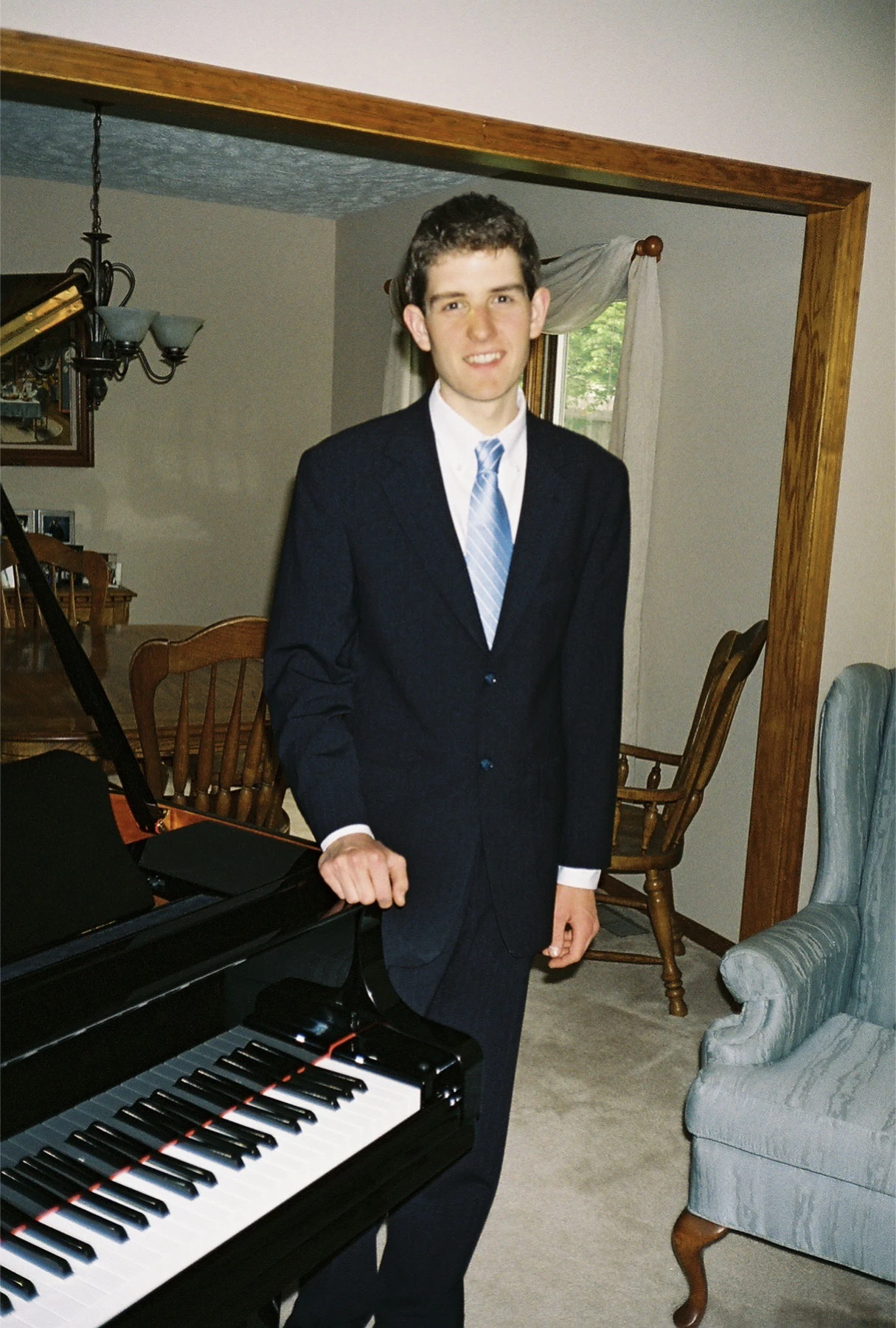
I did not understand rubato when I was young, which is strange, because I was already doing it.
I know I was doing it, because there is a recording in my memory, if not on tape — a masterclass, Schumann’s Aufschwung — where I played the piece slightly under its marking. Sehr rasch, Schumann wrote. Very fast. I did not play it very fast; I played it at the fastest tempo where the inner voices could still be heard, and not one click faster, because I knew that at full speed the line I loved would smear into the line everyone hears, and disappear. An older man in the audience approached me afterward, clearly moved. He had heard the piece many times and admitted to never fully understanding it until my performance. I thought I had simply played some phrases a little slow and voiced some tenor notes distinctly.
It took me the better part of a life to understand that I had made a transaction.
The textbook calls rubato “stolen time,” and then, in the way of textbooks, it makes the theft sound like freedom. Expressive liberty. Push and pull the tempo as feeling dictates. This is not wrong, but it is a shallow reading that produces shallow playing, because it presents rubato as permission — as freedom from the beat.
It is the opposite. Rubato is freedom bought with the beat.
The full name is tempo rubato: robbed time. And a robbery implies a victim, a debt, something taken that must be answered for. Real rubato is a ledger with balanced books. You steal time from one place and you pay it back in another, and across the phrase the account settles to zero. The pulse underneath never wavers. The listener still feels the floor beneath their feet. You did not slow down; you moved time — took it from where it was cheap and spent it where it was dear — and the theft is invisible because it was repaid before anyone could miss what was taken.
This is the whole difference between rubato and indulgence, and the difference is not in how the lingering sounds. It is in whether something was given up to afford it.
Indulgence is beauty you stole and never settled the debt on. The indulgent player stretches every moment, savors every phrase, adorns every transition — and it sounds, at first, like generosity. It is not. It is cowardice. Because to dwell on everything is to refuse to decide what is worth dwelling on. The indulgent player wants it all, pays nowhere, and so nothing lands — when every moment is elevated, no moment is, and the adornment becomes wallpaper. Indulgence looks like excess. It is the refusal to choose, dressed up as feeling.
Here is the thing that took me twenty years, and it is not a musical idea at all.
If lingering were free — if you could stretch each beautiful moment with no repayment anywhere — then there would be no such thing as interpretation. Interpretation exists only because the time is finite and the ledger must balance. The moment you accept that dwelling here means rushing there, the music forces a question on you that it will not answer for you:
What deserves the time?
You cannot savor everything. The score will not tell you which phrase is the one that matters. You have to decide — this arrival earns the dwelling, that transition will pay for it, this inner voice gets to breathe, that passage will be played plainly so it can afford the breathing. And that decision is not in the notes. It is you. Two great pianists play the identical score and are unmistakably different people, and the entire difference is where each chose to spend and where each chose to pay.
So the cost is not a constraint on meaning. The cost is the meaning. It is the only place in the performance that is yours, because it is the only place the composer left the deciding to you.
I understand now why I could not learn this young.
You cannot practice rubato from inside scarcity. The tense player — the one who plays every note as though it is the only one he will be given, who is braced for the music to be taken away — has no surplus to spend. He cannot linger, because lingering requires believing there will be enough time left after he has given some up. Rubato asks you to trust that the beat will still be under you after you have stolen from it. That trust is not a technique. It is a kind of security, and I did not have it. I was too busy holding on to everything to give any of it away on purpose.
Learning rubato, really learning it — understanding at last that it must cost — turned out to be about something that had nothing to do with the piano. It meant I had come to believe I had enough to spend. That I could dwell in a beautiful thing and trust the structure would still hold me on the other side. That giving something up was not loss but the price of dwelling, and that I could, finally, afford the price.
And then I understood that my whole life is a rubato problem.
Finite time. I cannot dwell in everything. An evening given to writing my novel is an evening the other work does not get. Presence with the friends I care about is bought by rushing something else, somewhere, that I have decided matters less. To finish one thing is to refuse the pleasure of starting ten. Every one of these is the same transaction I made at nineteen without knowing it: steal from here, pay there, keep the pulse true, and above all decide what is worth the lingering — because the refusal to decide is not freedom. It is a life played at uniform tempo, every moment weighted the same, and therefore a life in which nothing is meant.
You cannot linger without a cost somewhere else. So you decide what is worth the cost, and you pay it on purpose, and you let the lesser moments be plain so the greater ones can breathe.
That is rubato. That is interpretation. That is a life with a shape instead of a life that merely elapses.
I moved a stranger at nineteen and thought I had played some phrases a little slow. What I had actually done was decide — before I had the words for deciding — that one voice was worth more than the speed it cost me. I have been making that decision ever since, at the keyboard and away from it. It only took me this long to hear what my own hands already knew.
The cost is where the self lives.