Inside OpenAI's Agent Builder
When OpenAI announced AgentKit, it wasn't just another SDK or shiny developer tool — it was a declaration of intent. OpenAI wants to own the entire lifecycle of AI agents, from your first prototype to production deployment. And they're not being subtle about it.
At the center of that vision is the Agent Builder, a visual environment where you design how an agent actually thinks, plans, and acts. It's part interface, part IDE, and entirely strategic.
Here's what I think is really happening: OpenAI looked at the explosion of agent frameworks over the past year — LangGraph, CrewAI, AutoGen, all these ReAct-style pipelines — and realized they were losing ground. Every team was building on top of OpenAI's models, sure, but using someone else's orchestration layer. That's a dangerous position for a company that wants to be a platform, not just a model provider.
Agent Builder isn't just catching up, it's a bid to become the default environment for agent development. It doesn't just expose APIs or hand you an SDK and wish you luck. It lets you see how your agent operates, visually compose its reasoning steps, and manage everything that comes after: evaluation, safety, connectors, and even UI embedding.
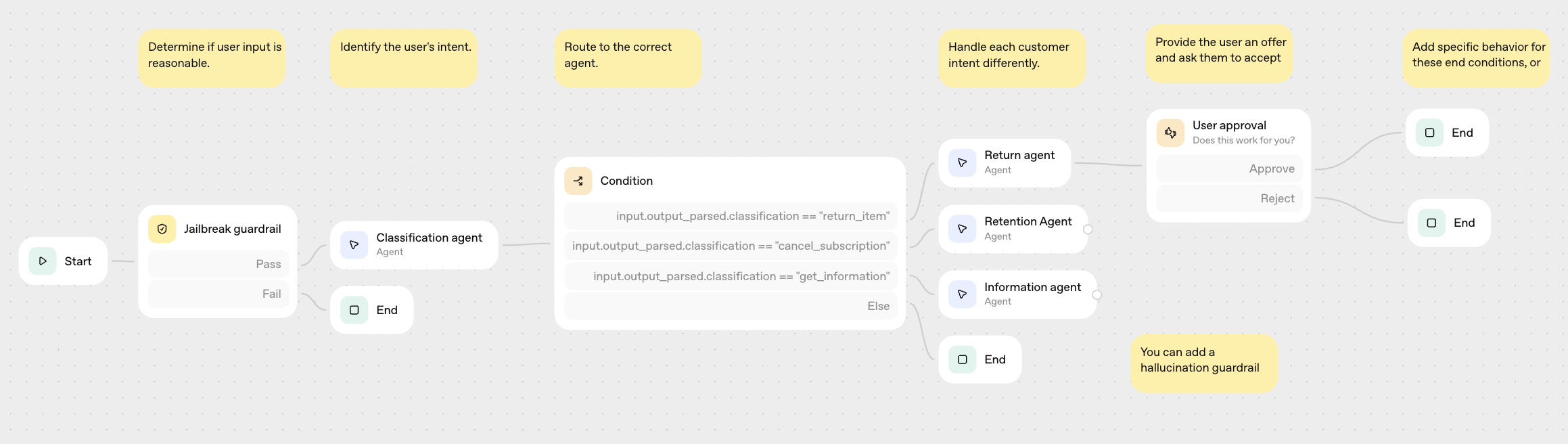
The core idea is simple: instead of writing scripts to chain together model calls, you get a canvas. Each node is a step in your agent's reasoning or a tool it can use. You connect them, define branching logic, add guardrails, and preview how it all flows.
That visual layer sits on top of OpenAI's Responses API and the Agents SDK, which handle the actual model orchestration and tool execution. Together, they give you a spectrum: pure code on one end, full drag-and-drop on the other, and everything in between.
Think of it like the jump from writing shell scripts to using a real IDE. The code's still there if you want it, but the complexity becomes abstracted into something you can actually see and manipulate.
Full Stack#
What makes Agent Builder ambitious — and a little intimidating — is the scope. It's not just a visual editor. It's an entire ecosystem designed to swallow every piece of the agent development workflow.
Need to connect to internal systems? There's a Connector Registry — basically a permissioned app store for data sources like Google Drive, Slack, or your company's internal APIs.
Want to ship an agent to customers? Use ChatKit, OpenAI's drop-in chat UI that you can brand and embed anywhere.
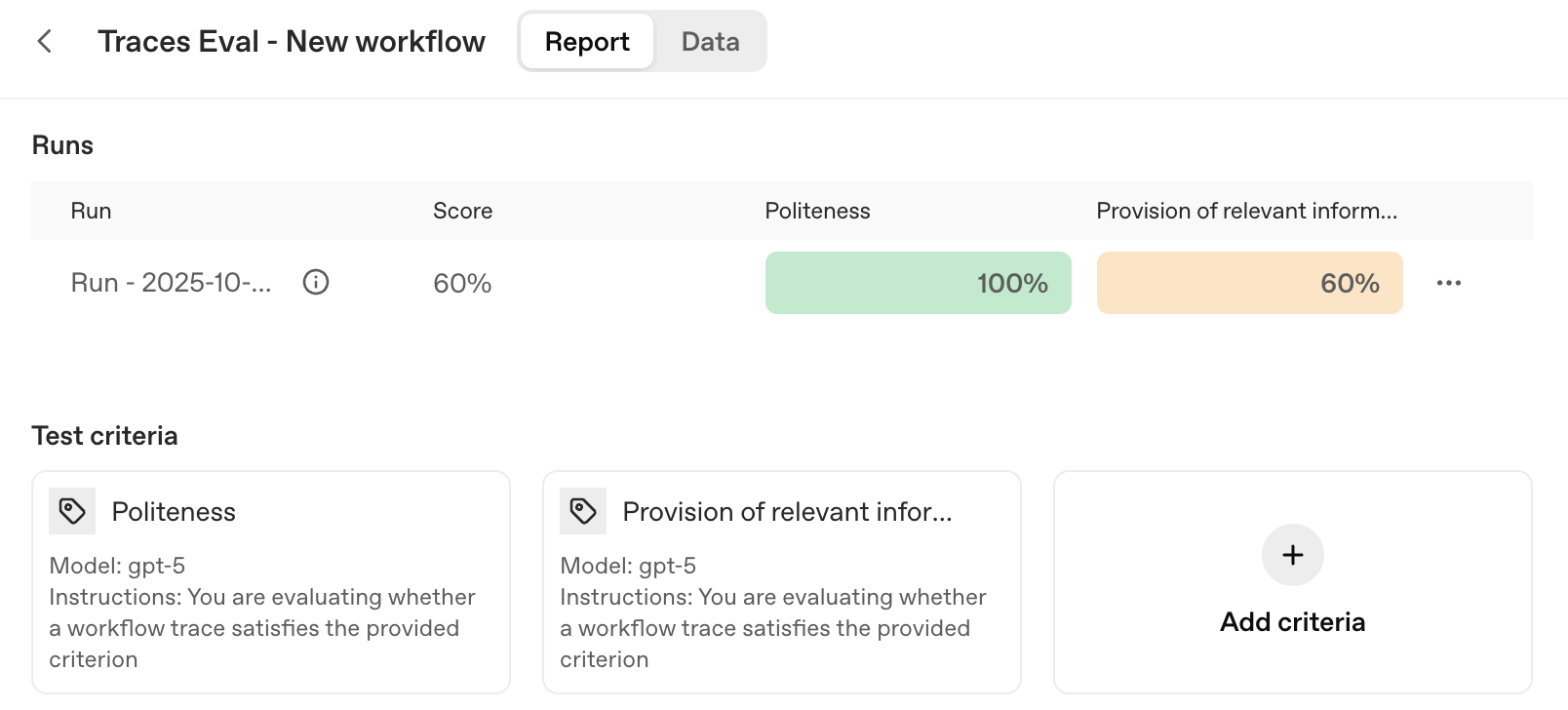
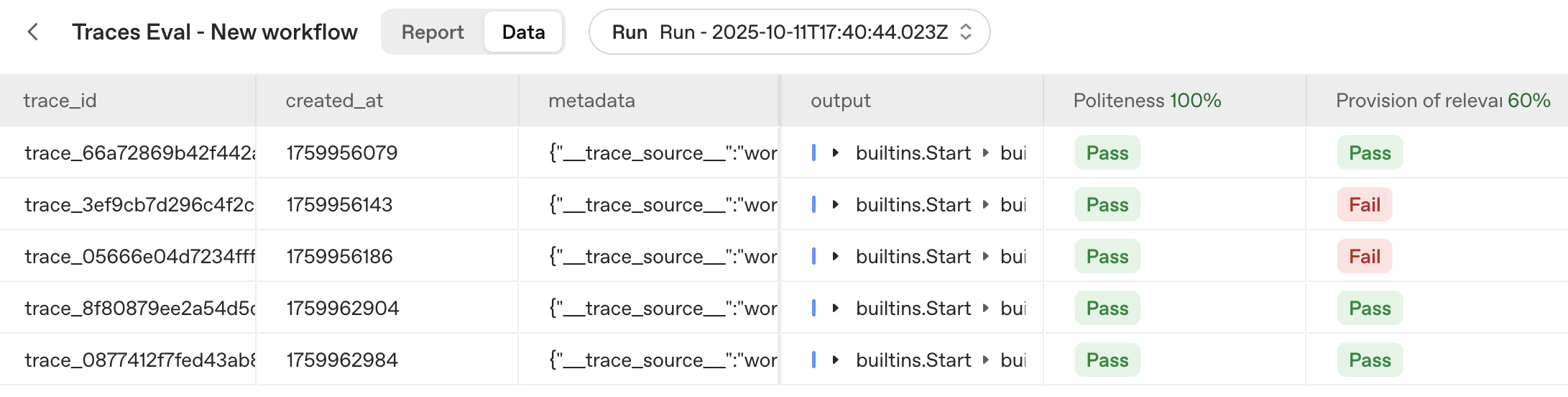
Worried about evaluation? Built-in grading tools, automated prompt optimization, and trace inspection are all there. No more flying blind between iterations.
And yes, it handles versioning, governance, and all the compliance stuff that usually turns prototypes into months-long deployment slogs. OpenAI clearly talked to people who've actually shipped AI products, because they're solving the boring problems that kill projects.
This is the real tell: OpenAI isn't trying to be the cool new framework. They're trying to be the default infrastructure for agent development. They want to be what AWS is to cloud computing — the thing you use not because it's the most innovative, but because it's the most complete.
The Coherence Play#
Right now, most teams building AI products are duct-taping together a Frankenstein stack: LangGraph for orchestration, custom scripts for evaluation, Weights & Biases for logging, some internal dashboard for metrics, and a homegrown chat UI because every framework feels half-baked.
OpenAI's bet is simple: coherence beats best-of-breed. If you can iterate 70% faster (their claim, but honestly not hard to believe), teams will tolerate some lock-in. And they're probably right.
But let's be clear about what you're signing up for. This is ecosystem lock-in by design. AgentKit is built for organizations willing to commit to OpenAI's stack — not just the models, but the entire development lifecycle. If you care deeply about portability or self-hosting or keeping your options open, this probably isn't for you.
That said, most companies don't actually want optionality. They want to ship. And OpenAI is betting that the pain of managing a fragmented toolchain is worse than the risk of commitment.
The Research Roots (And Why They Matter)#
There's a fascinating backstory here. The name AgentKit first appeared in a 2024 research paper about structured LLM reasoning with dynamic graphs — basically treating an agent's thought process as a modular graph where each node is a subtask, a reflection, or a decision point.
That paper wasn't just academic navel-gazing. It was a blueprint. The visual interface in Agent Builder — nodes, connections, branching logic — is almost a direct translation of that research model into a product interface.
This is OpenAI doing what they do best: taking research seriously, then shipping it before anyone else can. It's the same playbook they used with GPT-3, DALL-E, and Codex. Research to product, and product to moat.
What It Actually Looks Like to Build Something#
Let's say you want to build an agent that researches a topic, pulls data from an internal database, and generates an executive summary.
In Agent Builder, you'd start by dropping nodes onto the canvas: fetch, filter, summarize, format. Connect them with logic, add guardrails where things could go wrong, preview a trace to see how information flows through the system.
Then you'd wire it to your actual systems through the Connector Registry, embed the UI with ChatKit, and run evaluations on sample data to stress-test it. Once it's solid, you push it live with versioning, monitoring, and cost controls baked in.
The pitch is: what used to take three frameworks, two dashboards, and a custom backend now happens in one place. And honestly? For most teams, that's compelling enough.
Where OpenAI Is Really Going#
Here's my read: OpenAI is playing a longer game than most people realize.
Right now, everyone's focused on the model race — who has the best benchmark scores, who's training the biggest models, who can do reasoning or vision or coding better. But OpenAI is quietly shifting from "best model provider" to "default platform for AI applications."
Agent Builder is a piece of that. So is the Responses API, the Connector Registry, ChatKit — all these components that turn OpenAI from an API you call into an environment you build inside of.
This is the Microsoft strategy. Give developers the tools to build, make those tools good enough that switching costs become prohibitive, and suddenly you're not just selling models — you're renting out the entire development lifecycle. (I wrote about this dynamic in more depth — the TLDR is that foundation models are becoming commodities, and the real value is in controlling how and where people use AI.)
The question isn't whether Agent Builder is innovative. It's whether OpenAI can execute this platform play faster than Google, Anthropic, and the open-source ecosystem can respond. Because if they can, we're not heading toward a world of interchangeable AI providers. We're heading toward a world where OpenAI is the infrastructure — and everyone else is fighting for scraps.
For teams trying to ship agent-powered products today, Agent Builder is probably the safest bet. It's coherent, it's comprehensive, and it's backed by the company that (for now) still sets the pace.
Just know what you're betting on: not just a tool, but a platform. Not just a product, but a strategy.